Top IPL Hair Removal Safety Tips for Summer?

Time:2026-10-01 Author:Sienna
0%

Is IPL hair removal safe during summer? The honest answer is conditional. Summer does not automatically make IPL unsafe, but stronger sunlight raises the chance of burns, blistering, and uneven pigmentation. The American Academy of Dermatology Association advises avoiding tanning before treatment and using broad-spectrum SPF 30 or higher. The U.S. Food and Drug Administration also warns that IPL devices can cause skin injury when used incorrectly or on recently tanned skin.

Dr. Mark S. Nestor, a recognized laser and cosmetic-dermatology specialist, has warned, “Sun-exposed or tanned skin can increase the risk of burns and pigmentation changes.” That caution matters beside a bright pool, during beach holidays, or after a short afternoon walk. Melanin absorbs IPL energy. Recently darkened skin may absorb too much.

Industry safety reviews, including findings discussed in the Journal of Cosmetic and Laser Therapy, consistently emphasize patient selection, cooling, eye protection, and trained supervision. Home devices usually use lower energy, but lower energy does not mean zero risk. Read the manual carefully. Perform a patch test. Never treat sunburned, irritated, or broken skin.

Plan sessions away from intense sun exposure. Many clinics recommend at least two weeks before and after treatment, though individual advice varies. Wear protective clothing, reapply sunscreen, and postpone treatment when your skin tone has changed noticeably. I once thought summer scheduling was mainly inconvenient. It is more serious than that. Safe IPL depends on skin condition, device settings, hair color, and professional assessment. A qualified practitioner should review medications, photosensitivity, and your recent sun exposure before proceeding.
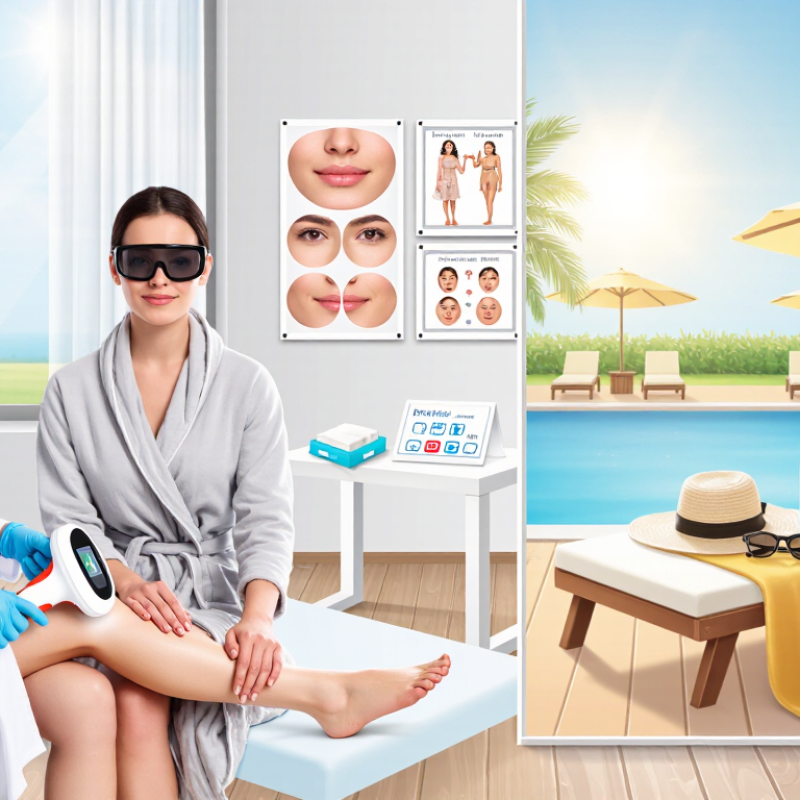
Top IPL Hair Removal Safety Tips for Summer?

Assess Skin Type and Hair Color: IPL Best Targets Darker Hair

Top IPL Hair Removal Safety Tips for Summer

Assessing skin type and hair color is essential before using IPL in summer. IPL works best when hair contains more melanin than the surrounding skin. Dark brown or black hair usually responds well. Blonde, red, white, and gray hair may respond weakly or not at all. Darker skin can absorb more light energy, increasing the risk of burns or temporary pigment changes. Recently tanned skin needs extra caution. Sun exposure changes its sensitivity, even when tanning looks mild.

Tips: Check your skin and hair under natural light. Read the device instructions carefully. Perform a small patch test first, then wait for the recommended time. Stop if you notice blistering, severe pain, or unusual discoloration. Do not treat irritated, sunburned, or broken skin. A qualified professional can help assess uncertain skin tones or unusual reactions.

It is tempting to assume stronger settings produce faster results. That is not always true. Safe progress matters more than speed. I used to think hair color was the only major factor, but skin tone and recent sun exposure can change the risk significantly. Use clean, dry skin and avoid tanning during a treatment course. Results may also vary across the body; underarm hair can respond differently from facial hair. Keep realistic expectations, especially with light or fine hair.

Check IPL Wavelengths: Professional Filters Typically Span 500–1,200 nm

Top IPL Hair Removal Safety Tips for Summer

Summer skin needs careful IPL planning. Professional filters typically span 500–1,200 nm, but every device uses a different range. Wavelength affects how light interacts with melanin and hair follicles. Shorter wavelengths may be absorbed more strongly by surface pigment. Longer wavelengths can reach deeper targets with less surface absorption. This difference matters greatly for darker or recently tanned skin.

Do not assume a wider wavelength range means better results. It does not. A qualified practitioner should assess your skin tone, hair colour, tanning history, and treatment area. Ask which filter will be used and why. Avoid treatment on sunburned, irritated, or freshly tanned skin. Even mild redness can increase discomfort and burn risk. Patch testing is sensible, especially before treating larger areas.

Use strict sun protection before and after treatment. Wear clothing that covers the area, and apply broad-spectrum sunscreen as directed by a healthcare professional. Skip tanning beds and intentional sun exposure. Follow the device instructions exactly, including cooling and treatment intervals. Some guidance can feel vague, which is a real weakness. If the instructions do not explain wavelength selection, skin-tone limits, or warning signs, pause treatment and seek professional advice. Stop if you notice blistering, severe pain, or unusual darkening, and arrange medical evaluation.

Top IPL Hair Removal Safety Tips for Summer: Check IPL Wavelengths

Professional IPL systems commonly use optical filters covering approximately 500–1,200 nm. Shorter cutoff wavelengths may increase interaction with melanin, while longer wavelengths generally penetrate deeper and may reduce superficial melanin absorption. Wavelength is only one safety factor: always follow the device instructions, avoid recently tanned skin, use suitable eye protection, and perform a patch test before broader treatment.

Avoid Recent Tanning and Apply Broad-Spectrum SPF 30+ Daily

Top IPL Hair Removal Safety Tips for Summer?

Recent tanning is a serious IPL concern. Tanned skin contains more melanin, which can absorb IPL energy and increase redness, blistering, or temporary dark patches. The American Academy of Dermatology recommends avoiding tanning and using broad-spectrum SPF 30 or higher. Many clinical protocols also suggest postponing IPL for two to four weeks after significant sun exposure. Follow your clinician’s timing advice.

Use sunscreen every day, even beside a bright window. The World Health Organization recommends extra protection when the UV Index reaches 3 or higher. Apply broad-spectrum SPF 30+ generously to exposed skin, including the legs, arms, neck, and often-missed ankles. Reapply every two hours outdoors, or sooner after sweating or swimming, consistent with U.S. Food and Drug Administration guidance. Clothing and shade add useful protection.

Small details matter. A thin, rushed layer is not enough. Most adults need about one shot-glass amount for the body, according to dermatology guidance. Do not apply sunscreen to broken or irritated skin. After IPL, wait until the skin tolerates products comfortably, then protect it carefully. I still see people treat sunscreen like a checkbox, then wonder why pigmentation lasts. That mistake is easy to make. It is also preventable. Never hide a recent tan from your IPL practitioner; treatment settings may need adjustment.

Follow Device Fluence and Pulse Limits Instead of Increasing Heat

Top IPL Hair Removal Safety Tips for Summer

Summer skin needs restraint, not extra heat. Follow the device’s stated fluence, pulse duration, and session limits. Increasing energy may raise burn risk without improving hair reduction. The FDA describes burns, pigment changes, and eye injuries among potential light-based treatment risks. Read the manual carefully. Small settings matter.

Avoid recently tanned or sunburned skin. Melanin absorbs IPL energy, which can increase discomfort and uneven pigmentation, especially on darker skin tones. A 2021 systematic review in Lasers in Medical Science reported that adverse effects were usually temporary, but pigment changes remained clinically important. Cover treated areas outdoors, and use broad-spectrum SPF 30 or higher. Reapply after sweating.

Patch-test first. Wait 24 to 48 hours before treating a larger area. Clean, dry skin is safer; do not apply oils, fragrance, or numbing products unless medically approved. One flash should feel warm and brief, not sharply painful. Stop when redness becomes intense or blistering appears. Do not chase faster results.

A 2019 review in Dermatologic Surgery found IPL hair reduction varies widely by hair colour, skin type, and treatment schedule. More power is not automatically better. I still find this easy to forget. Summer invites impatience, but measured settings protect the skin barrier. Keep treatment records, including fluence, pulse count, and skin response. Contact a qualified clinician for persistent pain, swelling, or colour changes.

Cool Treated Skin and Monitor for Blisters, Burns, or Pigment Changes

Summer heat can make IPL-treated skin feel more sensitive than usual. Follow the device instructions carefully, and avoid treatment on recently sun-exposed or sunburned skin. Clean, dry skin is safer to treat. Afterward, cool the area with a clean, damp cloth or a wrapped cold pack for several minutes. Never place ice directly on the skin. Loose cotton clothing can reduce rubbing and trapped heat.

Tips: Keep treated skin shaded and use broad-spectrum sunscreen as directed by a healthcare professional. Avoid hot showers, saunas, intense exercise, and fragranced products for the recommended recovery period. Do not scratch or peel flaky skin. I sometimes underestimate how warm summer air feels, so checking the area in natural light can reveal redness more clearly.

Mild redness or warmth may occur briefly, but worsening discomfort needs attention. Watch for blisters, open skin, crusting, severe swelling, or a burning sensation that does not settle. Pigment changes can appear later, especially after sun exposure. Darker or lighter patches deserve careful monitoring.

Stop further treatments and contact a qualified healthcare professional if symptoms increase, spread, or look unusual. Take clear photos with dates; they can help explain changes accurately. Skin does not always react predictably. When uncertain, pause.

FAQS

Which hair colors usually respond best to IPL?

Dark brown and black hair usually respond best because they contain more melanin. Blonde, red, white, and gray hair may respond weakly. Results can vary by body area.

Why does skin tone matter during IPL treatment?

Darker skin can absorb more light energy, increasing the risk of burns or temporary pigment changes. Skin tone and hair color both matter. I once assumed hair color was the main factor, but that was incomplete.

Can I use IPL after getting a tan?

Recent tanning increases skin sensitivity and may raise the risk of redness, blisters, or dark patches. Postpone treatment according to professional advice, often for two to four weeks after significant exposure. Do not hide a recent tan.

How should I protect my skin from sunlight during treatment?

Apply broad-spectrum SPF 30 or higher to exposed skin every day. Reapply about every two hours outdoors, especially after sweating or swimming. Cover ankles, arms, legs, and the neck carefully. A thin layer is not enough.

Should I perform a patch test before using IPL?

Yes. Treat a small area on clean, dry skin, then wait for the recommended period. Stop if severe pain, blistering, or unusual discoloration appears. Small steps matter.

What should I do after an IPL session?

Cool the area with a clean, damp cloth or a wrapped cold pack for several minutes. Never place ice directly on the skin. Wear loose cotton clothing and avoid rubbing, heat, and fragranced products during recovery.

Which activities should I avoid after IPL?

Avoid hot showers, saunas, intense exercise, and heavy sweating for the recommended recovery period. Keep treated skin shaded. Do not scratch or peel flaky skin. Summer heat can make discomfort harder to notice.

Which reactions require medical attention?

Mild redness or warmth may settle briefly. Increasing pain, blisters, open skin, crusting, severe swelling, or persistent burning needs professional attention. Darker or lighter patches also deserve monitoring. Pause immediately. Take dated photos to show changes clearly.

Conclusion

Is IPL hair removal safe during summer? It can be, provided you take extra precautions to protect your skin from heat, sunlight, and irritation. IPL generally works best on darker hair because the light targets pigment, while results may be limited on very light, gray, or red hair. Before treatment, assess your skin tone and avoid using IPL on recently tanned skin, as increased melanin can raise the risk of irritation or pigment changes. Apply broad-spectrum SPF 30 or higher every day and limit direct sun exposure before and after sessions.

Follow the device’s recommended fluence and pulse limits rather than increasing heat for faster results. Professional systems may use filters covering approximately 500–1,200 nm, depending on the treatment goal and skin type. After treatment, gently cool the area and watch for unusual redness, blisters, burns, swelling, or lasting discoloration. Stop treatment and seek qualified medical advice if severe or persistent reactions occur.

Sienna

Sienna

Sienna is a skilled marketing professional with a deep expertise in our company’s core products and services. With a passion for innovation and detail, she plays a pivotal role in crafting insightful blog posts that not only highlight the unique features of our offerings but also provide valuable......