Can men use IPL hair removal devices safely? In most cases, yes, when the device suits the user’s skin tone, hair color, and treatment area. Men commonly treat the chest, back, shoulders, legs, and beard-line regions. However, thicker male hair may require more sessions and careful intensity control.
Industry evidence supports growing consumer interest. Grand View Research’s 2024 home-use beauty-device report identifies IPL hair removal as a major category within personal-care technology. The U.S. Food and Drug Administration also classifies many home IPL products as light-based hair-removal devices requiring controlled energy delivery. These reports show market expansion, not automatic safety. That distinction matters.
Board-certified dermatologist Dr. Joshua Zeichner advises, “The device is only as safe as the way it is used.” Users should follow the manual, perform a small patch test, and avoid recently tanned or sunburned skin. Darker skin tones may absorb more light energy, increasing the risk of burns or pigmentation changes. Hair with little pigment may respond poorly. Gray, red, or very blonde hair can be difficult to treat.
Quality is another concern. “China best” does not always mean one consistent standard. Buyers should check manufacturer identity, safety certifications, cooling features, eye-protection guidance, and clear contraindications. Avoid treatment over tattoos, open wounds, suspicious moles, or irritated skin.
Results are gradual. Patience helps. Professional assessment remains sensible when users have sensitive skin, active dermatological conditions, or uncertainty about safe settings. Even careful users can misjudge their skin response. That is worth remembering before pressing the flash button.
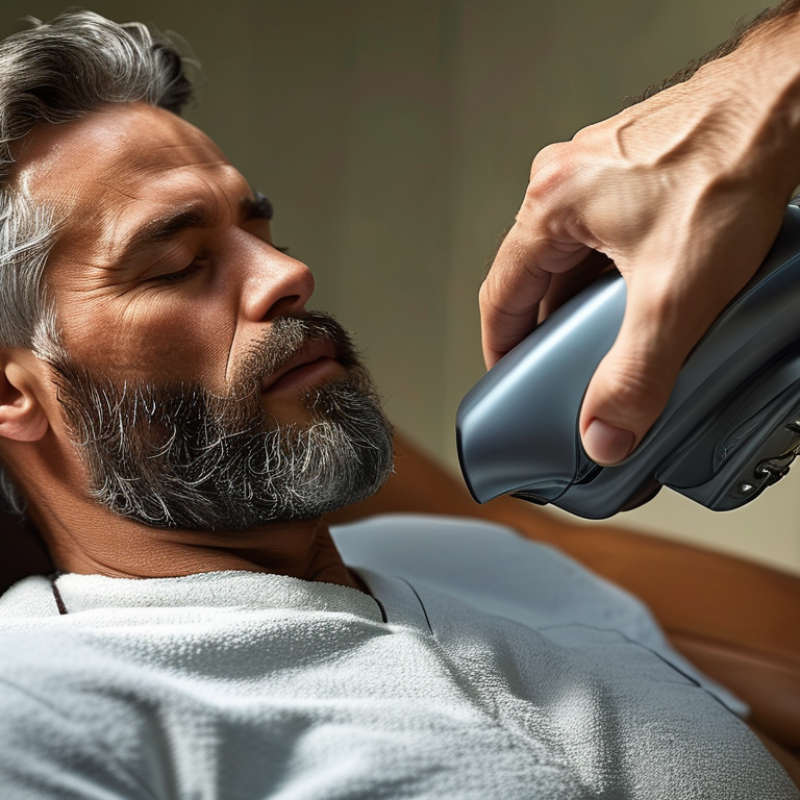
IPL hair removal devices use broad-spectrum light to reduce hair growth. The light is absorbed by melanin in the hair shaft, then converted into gentle heat. This heat can weaken the follicle during its active growth phase.
Men can use IPL devices safely when they follow the instructions carefully. Chest, stomach, arms, legs, and back usually need repeated treatments. Beard areas require more caution because facial skin can be sensitive. IPL works best when there is clear contrast between dark hair and lighter skin. It may work poorly on very light, red, grey, or white hair.
Shave the area before treatment, but do not wax or pluck the hair. Clean and dry the skin completely. A small patch test can reveal unexpected redness or discomfort. Avoid tattoos, dark moles, broken skin, sunburn, and irritated areas. It can hurt.
Device quality matters. Look for clear instructions, adjustable intensity, skin-tone detection, and recognized electrical safety information. Cooling features may improve comfort, but they do not remove every risk. Start with a lower setting and increase slowly if your skin reacts well. Some users expect permanent results too quickly. That expectation needs correction. Hair grows in cycles, so several sessions may be necessary, followed by occasional maintenance. When choosing among devices made in China, judge the safety documentation and testing information, not the country alone.
China-made IPL hair removal devices can be safe for men when used according to tested settings and clear instructions. Safety depends on skin tone, hair color, treatment area, and device quality. Male skin may be thicker, while beard hair is often dense and deeply rooted. IPL targets pigment, so dark brown or black hair usually responds better. Gray, white, red, and very light blonde hair may respond weakly. Very dark skin requires extra caution because the device may also heat surrounding melanin. No home device is risk-free.
Read the manual carefully, then perform a patch test on a small area for 24 to 48 hours. Shave visible hair first; do not wax or pluck the root. Avoid irritated skin, open cuts, tattoos, dark moles, and recently sunburned areas. Facial use needs special care, especially around the eyes and beard line. A lower setting may feel slower, but it can reduce redness, blistering, and discomfort. Stop if burning continues after treatment. Some results are uneven. That is normal, but it deserves review rather than repeated flashes.
Tips: Choose a device with skin-tone detection, adjustable energy, and reliable eye-safety guidance. Keep sessions spaced as instructed. Do not treat after strong sun exposure. Photographing the same area weekly can reveal gradual changes. If you have unusually sensitive skin, take photos of any reaction and consult a qualified dermatologist before continuing.
Choosing a Reliable IPL Device from China
Men can use IPL hair removal devices safely when the device matches their skin tone, hair color, and treatment area. However, the country of manufacture should not be the only concern. A reliable Chinese supplier should provide clear technical specifications, user instructions, safety warnings, and traceable production information. Look for adjustable energy levels, skin-tone detection, UV filtering, and stable cooling. These features matter more than attractive packaging or unusually low prices.
Ask for independent testing records and electrical safety documentation before purchasing. A trustworthy supplier should answer specific questions about pulse limits, lamp life, replacement parts, and warranty support. I would also check whether the manual explains suitable body areas and contraindications in plain English. Vague instructions are a warning sign. So is exaggerated advertising.
Start carefully.
Before a full session, perform a small patch test and wait at least 24 hours. Shave the area, clean the skin, and avoid using IPL over irritated or recently tanned skin. Lower settings may feel slower, but comfort and skin response should guide progress. My own preference is a device with a simple control panel and consistent flashes, not the model with the most settings. Some suppliers may provide impressive laboratory data, yet after-sales communication can still disappoint. That possibility deserves attention. Reliable support, documented quality checks, and realistic claims are essential when choosing an IPL device from China.
Typical at-home IPL guidance by Fitzpatrick skin phototype
The Fitzpatrick scale ranges from I to VI. Home IPL is generally more predictable on phototypes I–III, while phototype IV requires careful device matching, a patch test, and conservative settings. Phototypes V–VI are commonly excluded by home IPL instructions because higher melanin levels can absorb more light and increase the risk of burns or pigmentation changes.
The guidance index is an educational classification, not a clinical probability score. Men should choose a device with clear skin-tone limits, an automatic skin sensor, published electrical and optical safety information, and instructions that cover facial and body use. Never treat tattoos, dark moles, irritated skin, or the area close to the eyes, and perform a patch test before a full session.
Men can use home IPL hair removal devices safely when they follow a careful routine and respect the device limits. Check the manual before treating your chest, back, arms, or legs. Confirm your skin tone and hair color are compatible with IPL. Very light, red, grey, or white hair may respond poorly. Do not treat tattooed skin, irritated areas, open cuts, or skin with fresh sunburn.
Shave the area, then wash and dry it completely. Do not apply perfume, oil, or deodorant beforehand. Test one small patch and wait 24 hours. This step feels slow, but it can reveal unexpected redness. Start with the lowest comfortable setting. Place the window flat against clean skin, then release one pulse at a time. Avoid the eyes, forehead, and sensitive genital areas unless the manual clearly permits treatment. Never stare at the flash.
Use the device on its recommended schedule, not every day. Mild warmth or temporary redness can occur, but sharp pain, blistering, or lasting swelling requires stopping. Apply a plain moisturizer afterward and protect treated skin from strong sunlight. Devices made in China can vary in quality, so inspect safety sensors, electrical markings, instructions, and warranty support before buying. A low price is not proof of poor quality, but it is not proof of safety either. People with skin conditions, unusual moles, or light-sensitive medication should ask a qualified dermatologist first. You may need patience; uneven hair growth is normal.
Home IPL hair-removal devices can be safe when used exactly as directed, including many units manufactured in China. Safety depends more on testing, skin assessment, and technique than on country of manufacture. The American Academy of Dermatology lists temporary redness, swelling, and stinging as common treatment reactions. A systematic review in Lasers in Medical Science, covering 22 home-use light-device studies, also found that most reported effects were mild and short-lived.
Serious reactions still deserve attention. Incorrect intensity, repeated flashes, or treatment over recently tanned skin may cause burns, blistering, scarring, or lasting pigment changes. Darker skin can absorb more light energy, increasing the risk of heat injury. Patch-test a small area first. Wait 24 to 48 hours. Do not treat tattoos, irritated skin, open wounds, or suspicious moles. The U.S. Food and Drug Administration warns that adverse-event databases cannot prove how often injuries occur, so online reviews are not reliable safety statistics.
Stop immediately if pain feels sharp, swelling spreads, or blisters appear. Seek professional advice for severe pain, pus, fever, eye exposure, or changes lasting beyond several days. A dermatologist should review persistent dark or pale marks. Be honest about medications, recent tanning, and skin conditions. I would not treat “no downtime” as “no risk”; that phrase is convenient, but incomplete.
| Safety Dimension | Evidence-Based Guidance | Common Outcome or Risk | Recommended Action |
|---|---|---|---|
| Overall suitability for men | Men may use a suitable home IPL device when the device is legally marketed, used according to its instructions, and applied to an appropriate skin-and-hair combination. | IPL tends to work best when there is strong contrast between darker hair and lighter skin. Results may be limited on very light, red, gray, or white hair. | Read the intended-use information, confirm skin-tone compatibility, and follow the recommended treatment schedule. |
| Facial hair and beard areas | Facial hair is often coarse and dense, which can make treatment more uncomfortable and increase the chance of irritation. Some devices are not intended for the beard, jaw, neck, or areas close to the eyes. | Redness, warmth, stinging, or temporary swelling may occur. Incorrect use near the eyes can cause serious eye injury. | Use facial settings only where specifically permitted. Never treat eyelids, eyebrows, the area immediately around the eyes, or mucous membranes. |
| Chest, back, arms, and legs | These areas are commonly considered for home light-based hair reduction, provided the skin is intact and the device is approved for the area. | Temporary redness, mild tenderness, itching, or a warm sensation can occur after treatment. | Start with the lowest comfortable setting and perform a small patch test before treating a larger area. |
| Genital and intimate areas | Intimate skin can be more sensitive and more highly pigmented. Many home devices restrict use on the scrotum, penis, anus, or other mucosal areas. | Higher risk of pain, burns, pigment changes, and accidental treatment of unsuitable tissue. | Do not treat restricted areas. If the instructions are unclear, avoid treatment and ask a qualified healthcare professional. |
| Normal short-term side effects | Mild redness, warmth, tingling, or brief discomfort may occur immediately after a correctly performed session. | Symptoms generally settle within several hours and should not progressively worsen. | Stop treatment for the day, cool the area with a clean cool compress, and avoid heat, friction, and fragranced products until the skin settles. |
| Possible burns or blisters | Excessive energy, repeated flashes on the same spot, unsuitable skin tone, or use on recently tanned skin can increase burn risk. | Severe pain, marked swelling, blistering, crusting, or broken skin are not expected routine effects. | Stop using the device. Do not puncture blisters or apply irritating products. Seek prompt medical advice, especially for extensive or painful injuries. |
| Pigment changes | Temporary darkening or lightening can occur after inflammation, particularly in darker skin tones or after sun exposure. | Uneven dark or light patches may persist for weeks or longer. | Avoid treatment on recently tanned or sunburned skin, use sun protection, and consult a dermatologist if color changes are pronounced or persistent. |
| Paradoxical hair growth | Rarely, light-based hair reduction may be followed by increased growth of fine hair near the treated area. This has been reported more often in some facial and darker-skin treatment contexts. | Hair may appear denser or coarser instead of becoming less noticeable. | Stop repeated home treatment and seek professional advice before continuing or changing treatment settings. |
| Medication-related sensitivity | Some medicines and topical products can increase sensitivity to light or the likelihood of skin reactions. | Unexpected redness, rash, blistering, or prolonged irritation may occur. | Check the device instructions and ask a pharmacist or doctor before use if taking photosensitizing medicines or using strong skin treatments. |
| Skin conditions and tattoos | Do not use IPL over open wounds, active infections, inflamed skin, suspicious lesions, or tattoos unless a qualified professional specifically advises otherwise. | Treatment may worsen inflammation or heat the pigment and cause burns. | Cover or avoid tattoos and postpone treatment on abnormal or irritated skin until it has been assessed. |
| When to seek urgent medical help | Severe pain, extensive blistering, rapidly increasing swelling, infection signs, vision changes, or treatment near the eye require professional assessment. | Possible significant burn, infection, allergic reaction, or eye injury. | Stop using the device and obtain prompt medical care. Seek emergency help for breathing difficulty, facial swelling, or sudden vision problems. |
| Basic precautions | Shave rather than wax or pluck before treatment, keep the treatment window clean, and avoid sun exposure around treatment sessions. | These measures can reduce skin irritation and help light reach the hair follicle. | Follow the supplied schedule, do not flash the same area repeatedly, wear recommended eye protection, and discontinue use if reactions worsen. |
Important: Home IPL is not risk-free. Device instructions and local regulatory guidance take priority. This table is general information and does not replace advice from a dermatologist, doctor, or other qualified healthcare professional.
: Broad-spectrum light targets melanin in the hair shaft. The light becomes gentle heat. This heat can weaken active hair follicles. Several sessions are usually needed because hair grows in cycles.
Common areas include the chest, stomach, arms, legs, and back. Beard areas need extra care because facial skin can be sensitive. Avoid the eye area. Facial treatment is not automatically simple.
IPL usually works best with dark hair and lighter skin. Dark brown and black hair often respond better. Red, white, grey, and very light hair may respond weakly. Very dark skin needs additional caution because surrounding melanin absorbs light.
Shave the area before treatment. Do not wax or pluck the roots. Clean and dry the skin completely. Avoid recent tanning, sunburn, cuts, tattoos, dark moles, and irritation.
Yes. Test a small area first. Wait 24 to 48 hours. Watch for redness, swelling, burning, or unusual discomfort. A small test can reveal problems early. Do not ignore it.
Start with a lower intensity setting. Increase slowly only when your skin reacts well. Follow the spacing instructions carefully. Cooling may improve comfort, but it does not remove every risk. More flashes are not always better.
Temporary redness, swelling, and stinging can occur. These reactions are often mild and short-lived. Incorrect intensity may cause burns, blisters, scars, or lasting pigment changes. Stop immediately if sharp pain or spreading swelling appears.
Seek medical advice for severe pain, pus, fever, eye exposure, or blisters. Ask a dermatologist about marks lasting several days. Discuss sensitive skin, medications, recent tanning, or skin conditions beforehand. “No downtime” does not mean no risk.
Can men use IPL hair removal devices safely? In most cases, yes, when the device is suitable for the user’s skin tone, hair color, and treatment area. IPL works by sending pulses of light into the hair follicle, where pigment absorbs the energy and gradually reduces future hair growth. Men may use it on areas such as the chest, back, arms, legs, and shoulders, but facial and sensitive areas require extra caution because male hair is often thicker and denser. A reliable device from China should include clear instructions, adjustable intensity settings, skin-contact protection, and appropriate safety certifications.
Before treatment, shave the area, clean and dry the skin, and perform a small patch test. Begin with a low setting and increase gradually only if the skin reacts comfortably. Avoid use on irritated, recently tanned, or damaged skin. Temporary redness, warmth, or mild sensitivity can occur, but severe pain, blistering, swelling, or lasting discoloration requires stopping treatment and seeking professional medical advice.
